
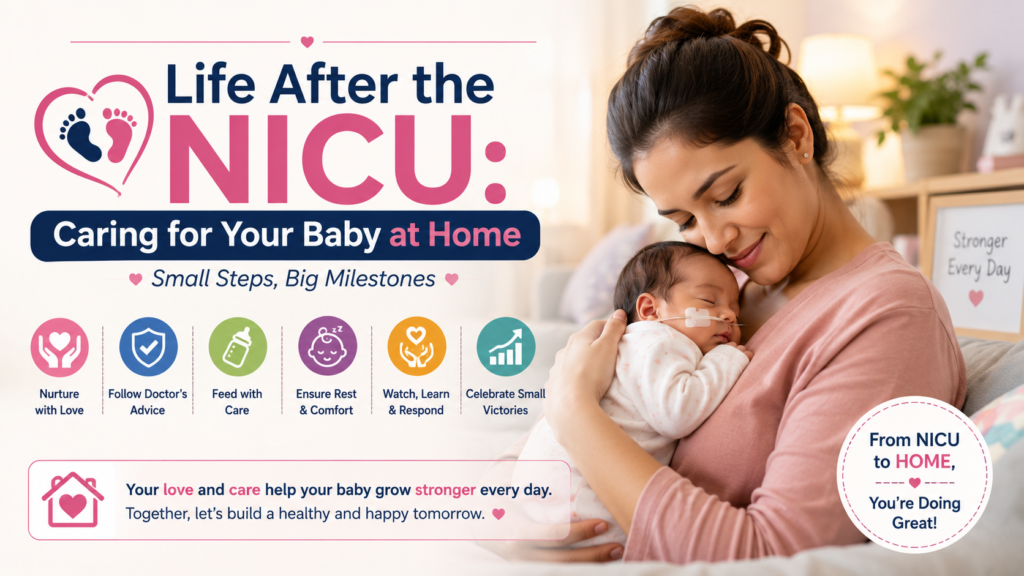
Life After the NICU is a new chapter filled with hope, learning, and special care as you help your baby grow stronger in the comfort of home.
Bringing your baby home after a stay in the Neonatal Intensive Care Unit (NICU) is a moment many parents eagerly wait for. It is exciting, emotional, and sometimes overwhelming. While your baby has made enough progress to leave the hospital, they may still need extra attention, regular follow-up appointments, and a consistent care routine at home.
Every baby is different, and the care plan will depend on your baby’s medical condition, gestational age at birth, and overall health. With the right guidance from your healthcare team and a little preparation, parents can confidently provide a safe and nurturing environment for their little one.
Understanding Your Baby’s Needs at Home
The transition from hospital to home may feel challenging at first, especially after having nurses and doctors available around the clock. However, remember that your baby’s discharge means the medical team believes your baby is stable enough to continue growing at home.
During Life After the NICU, it is important to follow the discharge instructions carefully. These may include feeding schedules, medications, vitamin supplements, sleeping positions, and follow-up appointments. Keeping a written routine can make daily care easier and help parents feel more organized.
Feeding Your Baby with Confidence
Feeding is one of the most important aspects of your baby’s recovery and growth.
Some babies feed directly from the breast or bottle, while others may require expressed breast milk, fortified milk, or a specialized formula recommended by their pediatrician.
During Life After the NICU, feed your baby according to the schedule provided by your healthcare team rather than waiting for long periods between feeds. Watch for signs that your baby is feeding well, such as regular swallowing, adequate wet diapers, and steady weight gain.
If feeding becomes difficult or your baby seems unusually sleepy during feeds, consult your pediatrician promptly.
Creating a Safe Sleep Environment
Good sleep is essential for your baby’s growth and development.
To reduce the risk of sleep-related problems:
- Always place your baby on their back to sleep.
- Use a firm, flat mattress.
- Keep pillows, blankets, and soft toys out of the crib.
- Avoid overheating the room.
- Maintain a smoke-free environment.
A safe sleeping space becomes even more important during Life After the NICU, as premature and medically fragile babies may need extra protection.
Protecting Your Baby from Infections
Babies who have recently been discharged from the NICU may have a developing immune system, making infection prevention especially important.
Simple precautions include:
- Wash your hands before handling the baby.
- Ask visitors to wash their hands.
- Avoid contact with people who are sick.
- Keep the home clean and smoke-free.
- Follow your doctor’s advice regarding vaccinations.
During Life After the NICU, limiting unnecessary exposure to crowded places during the early weeks may also help reduce the risk of common infections.
Never Miss Follow-Up Appointments
Regular medical checkups are an important part of your baby’s ongoing care.
Your baby may need visits with:
- Pediatrician
- Neonatologist
- Eye specialist
- Hearing specialist
- Nutrition expert
- Developmental therapist
These appointments help monitor your baby’s growth, feeding, vision, hearing, and overall development.
Keeping up with scheduled visits during Life After the NICU allows doctors to identify concerns early and provide timely support if needed.
Monitoring Growth and Development
Every baby grows at their own pace, especially those born prematurely.
Your healthcare provider will monitor:
- Weight gain
- Length
- Head circumference
- Feeding progress
- Muscle tone
- Developmental milestones
During Life After the NICU, avoid comparing your baby with other children. Premature babies often reach milestones according to their corrected age rather than their birth date.
Celebrate every small achievement, as each step reflects your baby’s continued progress.
Caring for Yourself as a Parent
Parents often focus entirely on the baby while forgetting their own physical and emotional well-being.
It is completely normal to experience mixed emotions after bringing your baby home.
Accept help from trusted family members, rest whenever possible, eat nutritious meals, and communicate openly with your healthcare provider if you feel anxious or overwhelmed.
Remember, caring for yourself enables you to care for your baby more effectively during Life After the NICU.
Know When to Contact Your Doctor
While most babies continue to improve after discharge, certain symptoms should never be ignored.
Seek medical advice if your baby has:
- Difficulty breathing
- Poor feeding
- Persistent vomiting
- Fever or low body temperature
- Bluish lips or skin
- Extreme sleepiness
- Fewer wet diapers than usual
- Unusual irritability
Prompt medical attention can help prevent small concerns from becoming serious problems.
Final Thoughts
Life After the NICU is a journey that requires patience, love, and teamwork between parents and healthcare providers. Although the first few weeks at home may feel challenging, every day brings new confidence and new milestones.
By following medical advice, maintaining regular follow-up visits, ensuring proper nutrition, practicing good hygiene, and creating a safe home environment, you can support your baby’s healthy growth and development.
Most importantly, remember that you are not alone. Your pediatrician and healthcare team are always there to guide you through Life After the NICU and answer any questions you may have along the way.