
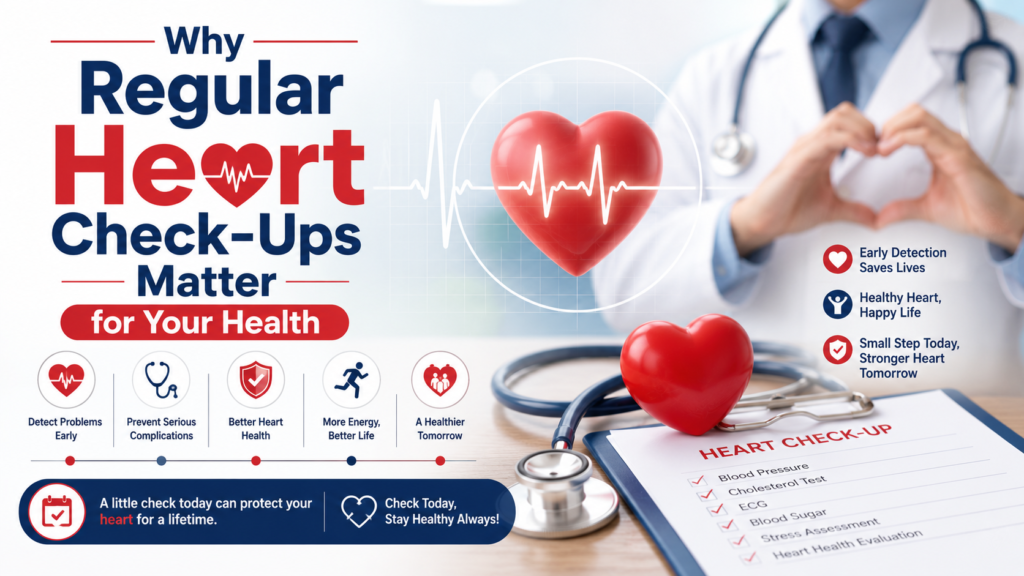
Regular Heart Check-Ups can help identify hidden heart health risks early, monitor important health changes, and support timely steps toward a healthier heart.
Your heart works continuously, every day and every night, to keep your body supplied with oxygen and nutrients. Because it works silently in the background, it is easy to overlook heart health until a problem develops.
Many heart-related conditions do not cause noticeable symptoms in their early stages. High blood pressure, high cholesterol, and some heart rhythm problems may remain unnoticed for years. A person may feel completely healthy while certain risk factors are gradually affecting their cardiovascular health.
This is where routine health evaluations can make a difference.
Regular Heart Check-Ups give you and your healthcare provider an opportunity to understand your current heart health, identify potential risk factors, and take preventive steps when necessary. The exact tests you need depend on your age, medical history, family history, lifestyle, and existing health conditions.
Taking care of your heart is not only about responding to symptoms. It is also about prevention, awareness, and making informed decisions before a serious problem develops.
Why Heart Health Should Not Be Ignored
Heart disease remains a major health concern worldwide, but many of its risk factors can be identified and managed.
Conditions such as high blood pressure, high cholesterol, diabetes, obesity, and smoking can increase cardiovascular risk. Some people may also have a family history that makes them more vulnerable.
The challenge is that several of these conditions may not produce obvious warning signs.
For example, high blood pressure is often called a “silent” condition because many people do not experience symptoms even when their readings are elevated.
Regular Heart Check-Ups can help identify these concerns and encourage appropriate lifestyle changes or medical treatment when needed.
Early Detection Can Make a Difference
One of the biggest benefits of Regular Heart Check-Ups is the opportunity to identify potential problems before they become more serious.
Depending on your health profile, your doctor may evaluate:
- Blood pressure
- Cholesterol levels
- Blood sugar
- Body weight
- Heart rate
- Family history
- Lifestyle habits
- Smoking or tobacco use
- Physical activity
- Other cardiovascular risk factors
If something appears unusual, your doctor may recommend additional tests or specialist evaluation.
Early identification does not always mean that you have heart disease. It simply gives you the opportunity to understand your health better and take appropriate action.
Blood Pressure Monitoring Is Essential
Blood pressure is one of the most important measurements in cardiovascular health.
When blood pressure remains high for a long time, it can place additional strain on the heart and blood vessels. Over time, uncontrolled hypertension may increase the risk of heart attack, stroke, kidney disease, and other health complications.
The good news is that high blood pressure can often be detected through a simple measurement.
Regular Heart Check-Ups may include blood pressure monitoring to help identify changes over time.
If your readings are consistently high, your doctor may recommend lifestyle changes, medication, or additional monitoring based on your individual needs.
Never stop or change prescribed blood pressure medication without consulting your healthcare provider.
Cholesterol and Heart Health
Cholesterol is another important part of cardiovascular risk assessment.
Your body needs cholesterol for several essential functions, but certain cholesterol levels that remain elevated over time can contribute to plaque buildup in the arteries.
A lipid profile may measure:
- Total cholesterol
- LDL cholesterol
- HDL cholesterol
- Triglycerides
Your doctor will interpret these values based on your overall health and cardiovascular risk.
Regular Heart Check-Ups can help you understand your cholesterol levels and determine whether lifestyle changes or treatment may be appropriate.
A healthy diet, regular physical activity, maintaining a healthy weight, and avoiding tobacco can all support better cardiovascular health.
Diabetes and Your Heart
Diabetes and heart health are closely connected.
High blood sugar levels over time can affect blood vessels and increase the risk of cardiovascular problems.
People with diabetes may require regular monitoring of blood glucose and HbA1c levels, along with other cardiovascular risk assessments.
If you have diabetes, managing your blood sugar as recommended by your healthcare team is an important part of protecting your heart.
Regular Heart Check-Ups can help your healthcare provider monitor your overall cardiovascular risk and identify areas that may need attention.
Your Lifestyle Plays a Major Role
A heart check-up is valuable, but it is only one part of maintaining good cardiovascular health.
Your everyday habits also matter.
Some heart-friendly lifestyle choices include:
- Eating a balanced diet
- Staying physically active
- Maintaining a healthy weight
- Getting adequate sleep
- Managing stress
- Avoiding tobacco
- Limiting alcohol
- Taking prescribed medicines correctly
You do not need to change everything overnight.
Small, consistent improvements can be easier to maintain over the long term. Even simple changes, such as walking regularly, reducing highly processed foods, or improving sleep habits, can contribute to better overall health.
Who Should Consider Regular Heart Check-Ups?
Heart health assessments can be valuable for adults of different age groups, but the frequency and type of evaluation may vary.
You may need closer monitoring if you have:
- High blood pressure
- High cholesterol
- Diabetes
- Obesity
- A family history of heart disease
- A history of smoking
- Low physical activity
- Previous heart-related problems
- Other medical conditions that increase cardiovascular risk
Age is also an important factor.
Your doctor can recommend an appropriate schedule based on your personal risk profile rather than following a one-size-fits-all approach.
What Tests May Be Included?
The tests performed during a heart health evaluation depend on your symptoms, age, medical history, and risk factors.
Your doctor may recommend:
Blood Pressure Check
Helps identify elevated blood pressure and monitor changes over time.
Blood Tests
Tests such as lipid profile and blood glucose may help assess cardiovascular risk.
ECG
An electrocardiogram records the heart’s electrical activity and may help identify certain rhythm abnormalities or other cardiac changes.
Echocardiogram
A 2D echo uses ultrasound to create images of the heart and assess its structure and function when clinically indicated.
TMT or Exercise Stress Test
In selected patients, an exercise stress test may be recommended to evaluate how the heart responds to physical activity.
Other Cardiac Tests
Depending on the situation, your cardiologist may recommend additional investigations such as Holter monitoring, advanced imaging, or other specialized tests.
Not everyone needs every test. Your doctor will choose investigations based on your individual needs.
Pay Attention to Warning Signs
Even if you attend routine check-ups, you should never ignore new or concerning symptoms.
Seek medical attention if you experience:
- Chest pain or pressure
- Unexplained shortness of breath
- Persistent palpitations
- Fainting or near-fainting
- Unusual tiredness
- Swelling in the legs
- Sudden reduction in exercise tolerance
Some symptoms may have causes unrelated to the heart, but they should still be evaluated when they are persistent, severe, or unusual for you.
If you experience sudden severe chest pain, significant breathing difficulty, or other symptoms that may indicate a medical emergency, seek urgent medical care immediately.
Family History Matters
Your family history can provide important information about your cardiovascular risk.
If close family members have experienced heart disease, heart attacks, strokes, or certain inherited heart conditions at a younger age, tell your doctor.
This information may influence how your cardiovascular health is monitored.
Regular Heart Check-Ups can be particularly valuable for people with a strong family history because they provide an opportunity to discuss risk factors and preventive strategies with a healthcare professional.
A family history does not mean you will definitely develop heart disease. It simply helps your doctor understand your overall risk more clearly.
Stress and Mental Well-Being
Heart health is connected to more than physical factors.
Long-term stress can influence sleep, eating habits, physical activity, and other behaviors that affect cardiovascular health.
Finding healthy ways to manage stress can be beneficial.
Consider activities such as:
- Walking
- Yoga
- Meditation
- Deep breathing
- Spending time with family and friends
- Pursuing hobbies
- Maintaining a regular sleep schedule
If stress or emotional difficulties are affecting your daily life, speaking with a qualified healthcare professional can be helpful.
Taking care of your mental well-being is an important part of taking care of your overall health.
How Often Should You Have a Heart Check-Up?
There is no single schedule that is right for everyone.
The frequency of Regular Heart Check-Ups depends on factors such as:
- Age
- Blood pressure
- Cholesterol
- Diabetes
- Family history
- Smoking status
- Weight
- Physical activity
- Existing heart conditions
- Other medical conditions
Some healthy adults may only need routine preventive visits, while people with cardiovascular risk factors may require more frequent monitoring.
Your doctor can recommend a schedule based on your individual health profile.
Final Thoughts
Regular Heart Check-Ups are an important part of preventive healthcare. They can help identify cardiovascular risk factors, monitor changes over time, and provide an opportunity to make healthier choices before problems become more serious.
Remember that heart health is not determined by one test or one appointment. It is influenced by your daily habits, medical history, genetics, and overall health.
A heart-friendly lifestyle combined with appropriate medical monitoring can help you stay informed and take proactive steps toward better cardiovascular health.
If you have risk factors such as high blood pressure, diabetes, high cholesterol, obesity, or a family history of heart disease, talk to your doctor about the right heart health screening schedule for you.
Your heart works for you every day. Make caring for it a regular part of your health routine.