
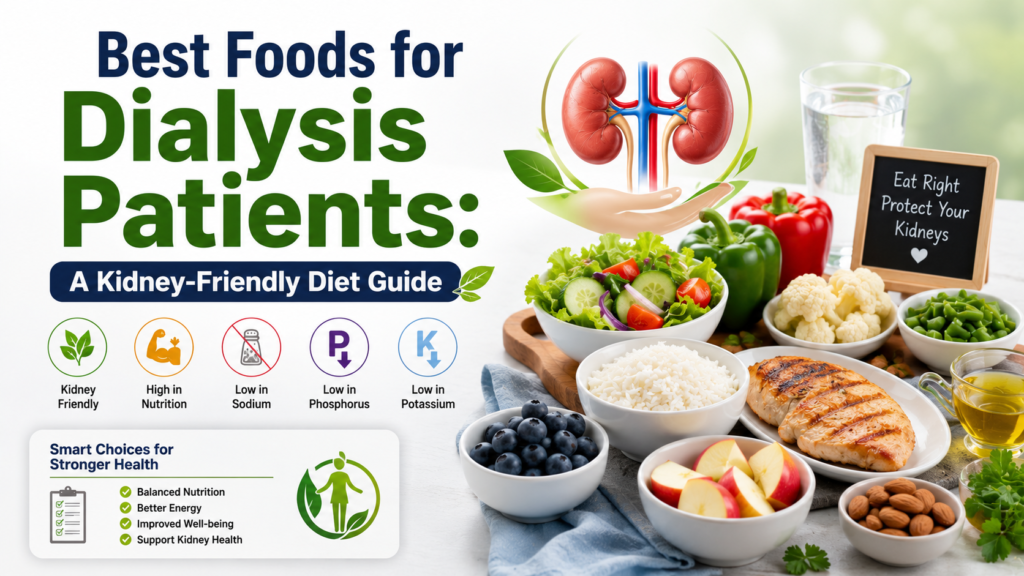
Foods for Dialysis Patients need to be carefully chosen to support energy, strength, and overall health while helping manage fluid, sodium, potassium, and phosphorus levels.
Starting dialysis can bring many changes to everyday life, and food is one of the areas where patients often have the most questions. What should you eat? Which foods should you limit? How much water is safe? Can you still enjoy your favorite meals?
The answer is not the same for every person.
Dialysis patients have different nutritional needs depending on the type of dialysis, kidney function, laboratory results, medications, urine output, other health conditions, and personal dietary habits. A food that is suitable for one person may need to be limited by another.
The goal of a kidney-friendly diet is not simply to remove foods from your plate. It is about choosing the right foods in appropriate portions and making sure your body gets enough calories and protein to maintain strength and support overall well-being.
A thoughtful meal plan can help dialysis patients manage their nutritional needs while still enjoying satisfying and flavorful meals.
Let’s explore some practical food choices and dietary habits that can help support a healthier lifestyle during dialysis.
Why Nutrition Matters During Dialysis
Dialysis performs some of the work that healthy kidneys normally do, including helping remove waste and excess fluid from the body. However, dialysis does not completely replace all kidney functions.
This is why nutrition becomes particularly important.
Patients on dialysis may need to pay attention to:
- Protein intake
- Sodium
- Potassium
- Phosphorus
- Fluid intake
- Calories
- Overall nutritional balance
Dialysis can also increase the body’s need for certain nutrients, particularly protein. At the same time, some minerals and fluids may need to be carefully controlled.
The right diet can help patients maintain muscle strength, support energy levels, and manage certain complications associated with kidney disease.
This is why it is important to follow a personalized diet plan recommended by your nephrologist and renal dietitian rather than following a generic diet found online.
Choose High-Quality Protein to Support Strength
Protein is an important part of a dialysis patient’s diet. During dialysis, some protein may be lost, and inadequate protein intake can contribute to muscle loss and weakness.
Good protein choices may include:
- Eggs
- Fish
- Chicken
- Lean meat
- Paneer, depending on individual phosphorus needs
- Tofu, depending on the patient’s dietary plan
- Certain pulses and legumes in appropriate portions
The amount of protein required can vary based on whether a person is receiving hemodialysis or peritoneal dialysis, as well as their nutritional status and other health conditions.
Protein portions should therefore be individualized.
For many patients, high-quality protein sources can help provide essential amino acids while supporting muscle maintenance.
Instead of focusing only on increasing protein, the better approach is to discuss your specific protein requirements with your renal dietitian.
Fresh Foods Can Be Better Than Highly Processed Options
When choosing Foods for Dialysis Patients, fresh and minimally processed ingredients are often a better starting point.
Packaged and processed foods may contain significant amounts of sodium, phosphorus additives, and other ingredients that may not be ideal for people with kidney disease.
Common foods that may contain hidden sodium or phosphorus additives include:
- Processed meats
- Instant noodles
- Packaged soups
- Fast food
- Processed cheese
- Ready-to-eat meals
- Packaged snacks
- Certain bakery products
Reading food labels can help you identify ingredients and additives that may need to be limited.
Cooking more meals at home gives you greater control over the amount of salt and other ingredients used.
This does not mean every packaged food must be completely avoided. Instead, learning to read labels and make informed choices can help you build a more balanced diet.
Be Smart About Potassium-Rich Foods
Potassium is an essential mineral that helps support muscle and nerve function. However, when kidney function is severely reduced, potassium can build up in the blood.
High potassium levels can sometimes affect the heart and may become dangerous.
Whether you need to limit potassium depends on your individual blood test results and your healthcare team’s advice.
Some foods that can be high in potassium include:
- Bananas
- Oranges
- Potatoes
- Tomatoes
- Avocados
- Dried fruits
- Certain fruit juices
- Coconut water
However, this does not mean every dialysis patient must completely avoid all of these foods.
Potassium requirements are highly individual. Some dialysis patients may need to limit certain high-potassium foods, while others may be able to include them in controlled portions.
Your renal dietitian can help you understand which fruits and vegetables are suitable for you and how much you can safely eat.
Manage Phosphorus for Better Bone and Heart Health
Phosphorus is another mineral that requires attention during dialysis.
When the kidneys are unable to remove enough phosphorus, levels can rise in the blood. Over time, high phosphorus levels can affect bone health and contribute to other complications.
Some foods naturally contain phosphorus, while others contain phosphorus additives.
Foods that may require careful portion control include:
- Dairy products
- Processed meats
- Certain nuts and seeds
- Cola beverages
- Processed foods containing phosphorus additives
- Some packaged foods
Reading food labels can be especially useful. Ingredients containing words such as “phos” may indicate added phosphorus.
Your healthcare provider may also prescribe phosphate binders for some patients. If prescribed, these medicines generally need to be taken exactly as instructed, often with meals or snacks.
Never change or stop prescribed medication without speaking with your healthcare provider.
Reduce Excess Sodium Without Losing Flavor
Salt can make food taste better, but too much sodium can cause the body to retain fluid and may increase thirst.
For dialysis patients, excess fluid accumulation can contribute to swelling, increased blood pressure, and breathing difficulties.
Reducing sodium can also make it easier to manage fluid intake.
Instead of relying heavily on salt, try adding flavor with:
- Fresh herbs
- Garlic
- Ginger
- Lemon
- Black pepper
- Cumin
- Coriander
- Other suitable spices
Be careful with salt substitutes unless your doctor recommends them. Some salt substitutes contain potassium, which may not be appropriate for certain dialysis patients.
Learning to cook with herbs and spices can help make kidney-friendly meals enjoyable without depending on large amounts of salt.
Keep Fluids Within Your Recommended Limit
Fluid management is one of the most important parts of a dialysis diet for many patients.
When the kidneys produce little or no urine, excess fluid can accumulate between dialysis sessions. This may lead to swelling, high blood pressure, breathing difficulties, and additional strain on the heart.
Your individual fluid allowance depends on factors such as your urine output, dialysis schedule, body size, and medical condition.
Your healthcare team may recommend limiting:
- Water
- Tea and coffee
- Milk
- Juice
- Soups
- Ice cream
- Ice cubes
- Other foods that are liquid at room temperature
If you experience excessive thirst, strategies such as using small cups, sipping fluids slowly, rinsing your mouth, or sucking on ice chips within your recommended allowance may help.
Never change your fluid restriction without discussing it with your dialysis team.
Choose Fruits and Vegetables According to Your Potassium Needs
Fruits and vegetables are an important part of a healthy diet, but dialysis patients may need to choose them carefully depending on potassium levels.
If your potassium level is high, your dietitian may suggest lower-potassium options that fit your nutritional needs.
Depending on individual requirements, options may include certain varieties of:
- Apples
- Grapes
- Berries
- Pineapple
- Cabbage
- Cauliflower
- Cucumber
- Bell peppers
- Lettuce
However, the best choices depend on your blood test results and overall diet.
Some vegetables may also be prepared using methods such as soaking and boiling to reduce potassium content, when appropriate. Your renal dietitian can guide you on the correct preparation method.
The important point is to avoid unnecessarily restricting your diet without professional guidance.
Make Your Meals Enjoyable and Practical
A kidney-friendly diet does not have to be boring.
Many patients feel that dialysis nutrition means giving up all their favorite foods. In reality, a renal diet can still include flavorful and satisfying meals when ingredients and portions are planned carefully.
For example, you can prepare homemade meals using fresh ingredients and kidney-friendly seasonings.
A typical meal might include:
- An appropriate portion of protein
- A suitable grain or carbohydrate source
- Carefully selected vegetables
- A fruit option based on potassium needs
- Limited sodium
- Controlled fluid intake
Traditional Indian meals can also be adapted to fit a kidney-friendly plan. The key is understanding portion sizes and choosing ingredients according to your individual potassium, phosphorus, sodium, and fluid requirements.
Small adjustments to familiar recipes can make dietary changes easier to maintain over the long term.
Be Careful With “Healthy” Foods That May Not Suit Everyone
Some foods are considered healthy for the general population but may need to be limited by certain dialysis patients.
For example, nuts, seeds, dairy products, certain fruits, coconut water, and some whole grains may contain significant amounts of potassium or phosphorus.
This does not mean these foods are unhealthy.
It simply means that people undergoing dialysis may need a more individualized approach to nutrition.
This is one of the most important things to understand when planning Foods for Dialysis Patients. A “healthy food” is not automatically suitable in unlimited amounts for every person with kidney disease.
Your diet should be based on your own blood test results, dialysis treatment, medications, and nutritional needs.
Sample Kidney-Friendly Meal Ideas
Meal planning can feel overwhelming at first. Having a few simple ideas can make it easier to get started.
Breakfast
Depending on your dietary requirements, breakfast might include an egg-based dish with suitable bread or another recommended carbohydrate source.
A small portion of fruit that fits your potassium plan may also be included.
Lunch
A balanced lunch could include a suitable portion of rice or chapati, a protein source, and vegetables selected according to your potassium and phosphorus needs.
Avoid adding excessive salt and choose homemade preparations whenever possible.
Evening Snack
Depending on your diet plan, a suitable snack might include a small portion of a recommended fruit, unsalted crackers, or another option suggested by your dietitian.
Dinner
Keep dinner balanced and avoid excessive portions. Include an appropriate protein source, carbohydrate, and vegetables that fit your individual renal diet plan.
Important Note
These are general examples, not a personalized dialysis diet. Your actual meal plan should be created according to your medical condition, laboratory results, dialysis type, and dietitian’s recommendations.
Foods and Drinks That May Need Extra Caution
Some foods may need to be limited depending on your individual nutritional needs.
These can include:
- High-sodium packaged foods
- Processed meats
- Foods with phosphorus additives
- Certain high-potassium fruits
- Certain high-potassium vegetables
- Excessive dairy products
- Cola beverages
- Salt substitutes containing potassium
- Large quantities of nuts and seeds
- Excessive fluids
The exact restrictions vary significantly from one patient to another.
A person with low potassium may receive different dietary advice from someone with high potassium. Similarly, fluid requirements may vary based on urine output and dialysis treatment.
This is why individualized nutritional guidance is so important.
The Role of a Renal Dietitian
Managing nutrition during dialysis can be complicated. A renal dietitian is specially trained to help people with kidney disease understand their dietary requirements.
They can help you:
- Plan balanced meals
- Understand your blood test results
- Manage potassium
- Control phosphorus
- Reduce sodium
- Follow fluid restrictions
- Maintain adequate protein intake
- Prevent unwanted weight loss
- Adjust your diet as your health changes
Your nutritional needs may change over time. Regular follow-up with your healthcare team can help ensure that your diet remains appropriate.
If you are unsure about a particular food, it is always better to ask your dietitian rather than completely removing foods from your diet unnecessarily.
Common Questions About a Dialysis Diet
Can dialysis patients eat fruits?
Yes, many dialysis patients can eat fruits. However, the type and quantity may depend on potassium levels and individual dietary requirements.
Can dialysis patients eat eggs?
Eggs can be a useful source of high-quality protein for many dialysis patients. The appropriate portion depends on your overall diet and nutritional needs.
Is coconut water good for dialysis patients?
Coconut water can be high in potassium and may not be suitable for people who need to restrict potassium or fluids. Always check with your healthcare provider before including it regularly.
Should dialysis patients completely avoid dairy?
Not necessarily. Dairy products contain valuable nutrients but can also contain phosphorus and potassium. Portion size and individual blood levels should be considered.
How much water can a dialysis patient drink?
There is no single amount that applies to everyone. Your fluid allowance depends on urine output, dialysis type, and medical condition. Follow the fluid limit provided by your dialysis team.
Final Thoughts
Choosing the right Foods for Dialysis Patients is an important part of managing life with kidney disease, but there is no single diet that works for everyone.
The ideal meal plan depends on your dialysis treatment, blood test results, urine output, medications, nutritional status, and other health conditions.
Instead of following strict food lists from the internet, work with your nephrologist and renal dietitian to understand what your body needs.
Focus on balanced meals, adequate protein, controlled sodium, appropriate fluid intake, and careful management of potassium and phosphorus when required.
Most importantly, remember that dialysis nutrition is not about giving up everything you enjoy. With the right guidance and a little planning, you can create meals that are both kidney-friendly and satisfying.
Your diet is an important part of your overall dialysis care. The right choices, made consistently, can help support your strength, energy, and quality of life.
If you are undergoing dialysis and are unsure about your diet, speak with your nephrologist or a qualified renal dietitian before making major changes to your eating or drinking habits.