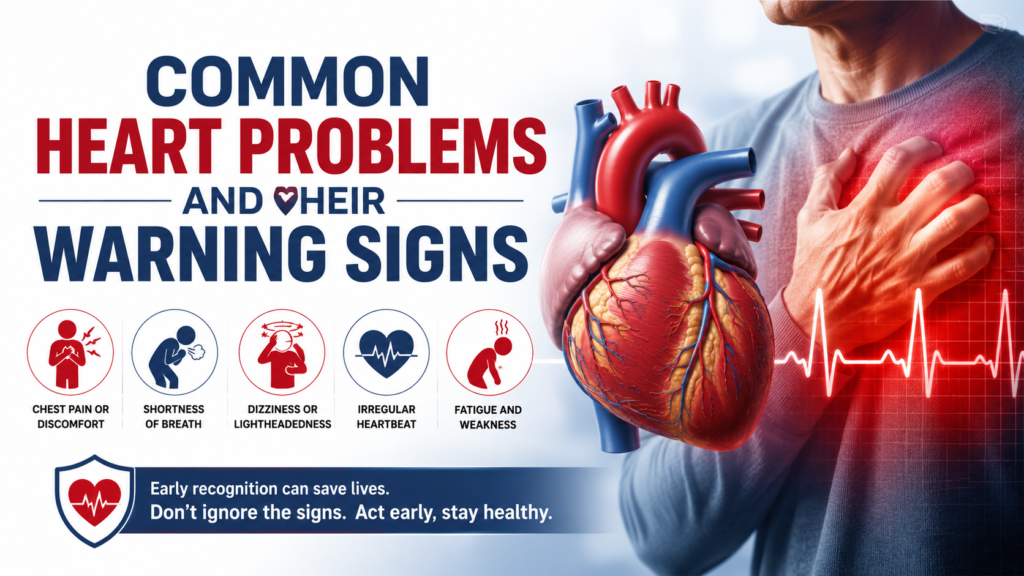
Common Heart Problems can develop gradually or appear suddenly, making it important to recognize early warning signs and seek timely medical attention when needed.
The heart is one of the most important organs in the human body. It works continuously, pumping blood throughout the body and supplying oxygen and nutrients to every organ and tissue. Because the heart plays such a central role in our health, problems affecting it should never be ignored.
Heart conditions can affect people of different ages and backgrounds. Some develop slowly over many years, while others may appear suddenly. High blood pressure, high cholesterol, diabetes, smoking, obesity, physical inactivity, and family history can all influence a person’s risk of developing cardiovascular disease.
One of the biggest challenges with heart disease is that symptoms are not always obvious. Some people may experience clear warning signs, while others may have mild or unusual symptoms that are easy to overlook.
Understanding the different types of heart problems and knowing their possible warning signs can help people recognize when it is time to speak with a healthcare professional.
Here are eight important heart-related conditions and warning signs everyone should know.
Coronary Artery Disease
Coronary artery disease is one of the most common heart conditions. It develops when the blood vessels that supply blood to the heart muscle become narrowed or blocked, often because of a buildup of fatty deposits called plaque.
When the arteries become narrowed, the heart may not receive enough oxygen-rich blood, particularly during physical activity or emotional stress.
One of the most familiar symptoms is chest discomfort, often described as pressure, tightness, heaviness, squeezing, or fullness. Some people may also experience discomfort in the shoulders, arms, neck, jaw, or upper back.
Other possible symptoms include:
- Shortness of breath
- Unusual tiredness
- Sweating
- Dizziness
- Nausea
- Reduced ability to exercise
Symptoms can vary from person to person. Some individuals may have no obvious symptoms until the condition becomes more serious.
The risk of coronary artery disease can increase with factors such as high blood pressure, high cholesterol, diabetes, smoking, obesity, physical inactivity, and a family history of heart disease.
Regular health checkups can help identify certain risk factors early and allow appropriate lifestyle changes or treatment when needed.
Heart Attack
A heart attack occurs when blood flow to part of the heart muscle becomes severely restricted or blocked. Without adequate blood and oxygen, the affected heart muscle can become damaged.
Recognizing the warning signs of a heart attack is extremely important because immediate medical treatment can be lifesaving.
Common warning signs may include:
- Pressure, squeezing, fullness, or pain in the center or left side of the chest
- Pain or discomfort spreading to the arm, shoulder, back, neck, jaw, or upper abdomen
- Shortness of breath
- Cold sweating
- Nausea or vomiting
- Lightheadedness
- Sudden unusual weakness or tiredness
Not everyone experiences the same symptoms. Some people, particularly women and older adults, may have less typical symptoms.
If you or someone nearby experiences symptoms that could indicate a heart attack, do not wait for the symptoms to disappear. Seek emergency medical care immediately.
Early treatment can help restore blood flow to the heart and reduce the amount of heart muscle damage.
Heart Failure
Heart failure does not mean that the heart has completely stopped working. It means that the heart is unable to pump blood efficiently enough to meet the body’s needs.
Heart failure can develop gradually and may be associated with conditions such as coronary artery disease, high blood pressure, heart valve problems, or previous damage to the heart muscle.
Common symptoms may include:
- Shortness of breath during activity or while resting
- Persistent tiredness
- Swelling in the feet, ankles, or legs
- Rapid weight gain due to fluid retention
- Difficulty breathing when lying flat
- Waking up at night feeling short of breath
- Persistent cough or wheezing
- Reduced ability to perform normal activities
Some symptoms may develop slowly, making them easy to dismiss as normal aging or lack of fitness.
However, persistent breathlessness, swelling, or unexplained fatigue should be discussed with a healthcare professional.
Early diagnosis and appropriate treatment can help manage symptoms, improve quality of life, and reduce the risk of complications.
Arrhythmias or Irregular Heart Rhythms
Arrhythmias occur when the heart beats too quickly, too slowly, or irregularly.
Some arrhythmias are harmless, while others may require medical evaluation and treatment. One well-known type is atrial fibrillation, an irregular heart rhythm that can increase the risk of blood clots and stroke.
Possible warning signs of an abnormal heart rhythm include:
- Feeling that your heart is racing
- Fluttering or pounding in the chest
- A sensation of skipped heartbeats
- Dizziness
- Lightheadedness
- Shortness of breath
- Unexplained weakness
- Fainting or near-fainting
Occasional awareness of your heartbeat may not always indicate a serious problem. However, repeated or persistent palpitations should not be ignored.
If palpitations occur along with chest pain, severe shortness of breath, fainting, or significant dizziness, urgent medical attention may be necessary.
A doctor may recommend tests such as an electrocardiogram or other heart monitoring to determine the cause of an irregular heartbeat.
Heart Valve Problems
The heart contains four valves that help blood flow in the correct direction through the heart chambers.
When a valve becomes narrowed or does not close properly, it can affect the normal flow of blood. These conditions are generally known as heart valve diseases.
Some valve problems are mild and may not cause noticeable symptoms for years. Others can become more serious over time.
Possible warning signs include:
- Shortness of breath
- Fatigue
- Swelling in the legs or ankles
- Chest discomfort
- Dizziness
- Fainting
- Irregular heartbeat
- Reduced ability to exercise
A heart murmur detected during a physical examination may sometimes be associated with a valve problem, although not every heart murmur indicates serious disease.
Doctors may use tests such as an echocardiogram to evaluate the structure and function of the heart valves.
Early detection can help healthcare professionals monitor the condition and decide whether treatment or further evaluation is necessary.
Cardiomyopathy
Cardiomyopathy refers to diseases that affect the heart muscle itself. The heart muscle may become enlarged, thickened, stiff, or weakened, depending on the type of cardiomyopathy.
Some forms can be inherited, while others may be associated with infections, certain medical conditions, or other factors.
Symptoms can vary significantly and may include:
- Breathlessness
- Fatigue
- Swelling of the legs or feet
- Chest discomfort
- Dizziness
- Fainting
- Rapid or irregular heartbeat
- Reduced exercise tolerance
In some cases, cardiomyopathy may not cause noticeable symptoms during the early stages.
People with a strong family history of certain heart muscle conditions should discuss their risk with a healthcare professional.
If a person experiences unexplained fainting, repeated palpitations, or a significant reduction in exercise capacity, medical evaluation is important.
High Blood Pressure and Its Effect on the Heart
High blood pressure, also called hypertension, is often known as a “silent” condition because many people do not experience noticeable symptoms.
Although high blood pressure may not cause obvious warning signs, it can gradually put extra strain on the heart and blood vessels. Over time, uncontrolled high blood pressure can increase the risk of heart disease, heart failure, stroke, kidney problems, and other complications.
This is why regular blood pressure checks are important, even when a person feels completely healthy.
To reduce the risk of heart-related complications, people can focus on healthy lifestyle habits such as:
- Eating a balanced diet
- Limiting excessive salt intake
- Maintaining a healthy weight
- Staying physically active
- Avoiding tobacco
- Limiting alcohol
- Managing stress
- Taking prescribed medication as directed
Common Heart Problems are sometimes discovered only during a routine health checkup, which is one reason regular medical assessments can be valuable.
If your blood pressure readings are consistently high, speak with a healthcare professional rather than waiting for symptoms to appear.
Recognize the Warning Signs and Know When to Act
Knowing the warning signs of Common Heart Problems can help people seek medical attention at the right time.
Some symptoms should never be ignored, especially when they appear suddenly or become severe.
Seek immediate medical attention if you experience symptoms such as:
- Severe or persistent chest pain or pressure
- Difficulty breathing
- Sudden fainting
- Severe dizziness
- New weakness or extreme fatigue
- A very fast or irregular heartbeat accompanied by other concerning symptoms
- Chest discomfort that spreads to the arm, back, neck, or jaw
Heart problems can sometimes present differently in different people. Symptoms may also be less obvious in women, older adults, and people with diabetes.
It is important not to diagnose yourself based only on symptoms found online. Chest discomfort or shortness of breath can have many possible causes, and only a qualified healthcare professional can determine the underlying problem.
When it comes to heart health, it is always better to take concerning symptoms seriously.
Who Is at Higher Risk of Heart Disease?
Several factors can increase a person’s risk of developing heart disease. Some risk factors cannot be changed, while others can be managed through lifestyle changes and medical care.
Risk factors may include:
- Increasing age
- Family history of heart disease
- High blood pressure
- High cholesterol
- Diabetes
- Smoking or tobacco use
- Overweight or obesity
- Physical inactivity
- Unhealthy dietary patterns
- Excessive alcohol consumption
- Long-term stress
- Certain underlying medical conditions
Having one or more risk factors does not necessarily mean that a person will develop heart disease. However, understanding your individual risk can help you and your healthcare provider make informed decisions about prevention and screening.
Regular checkups can help identify problems such as high blood pressure, high cholesterol, and diabetes before they lead to serious complications.
How Can You Protect Your Heart Health?
While not every heart condition can be prevented, many lifestyle choices can support better cardiovascular health.
To boost your heart health, consider making the following habits part of your daily routine:
Eat a Heart-Healthy Diet
Include vegetables, fruits, whole grains, legumes, nuts, and other nutritious foods. Limit highly processed foods and excessive amounts of saturated fats, added sugars, and salt.
Stay Physically Active
Regular physical activity can support cardiovascular fitness and help maintain a healthy weight. Choose activities that you enjoy and can follow consistently.
Avoid Tobacco
Smoking is a major risk factor for cardiovascular disease. Quitting smoking can provide significant benefits for heart and overall health.
Monitor Your Health
Regularly check important health measurements such as blood pressure, blood sugar, and cholesterol when recommended by your healthcare provider.
Manage Stress
Long-term stress can affect overall health. Relaxation techniques, adequate sleep, physical activity, hobbies, and spending time with loved ones may help support emotional well-being.
Take Prescribed Medicines Correctly
If your doctor has prescribed medication for blood pressure, cholesterol, diabetes, or another condition, take it as directed and attend recommended follow-up appointments.
Final Thoughts
Your heart works continuously throughout your life, and taking care of it should be part of your overall approach to health.
Understanding Common Heart Problems and their warning signs can help you recognize potentially concerning symptoms and seek medical advice when necessary. However, symptoms alone cannot confirm a diagnosis.
Regular health checkups, a balanced diet, physical activity, avoiding tobacco, managing risk factors, and following medical advice can all play an important role in protecting your cardiovascular health.
Never ignore persistent or severe chest pain, sudden difficulty breathing, fainting, or other serious symptoms. When it comes to your heart, timely medical attention can make a significant difference.
Take care of your heart today—it is working for you every moment of every day.